
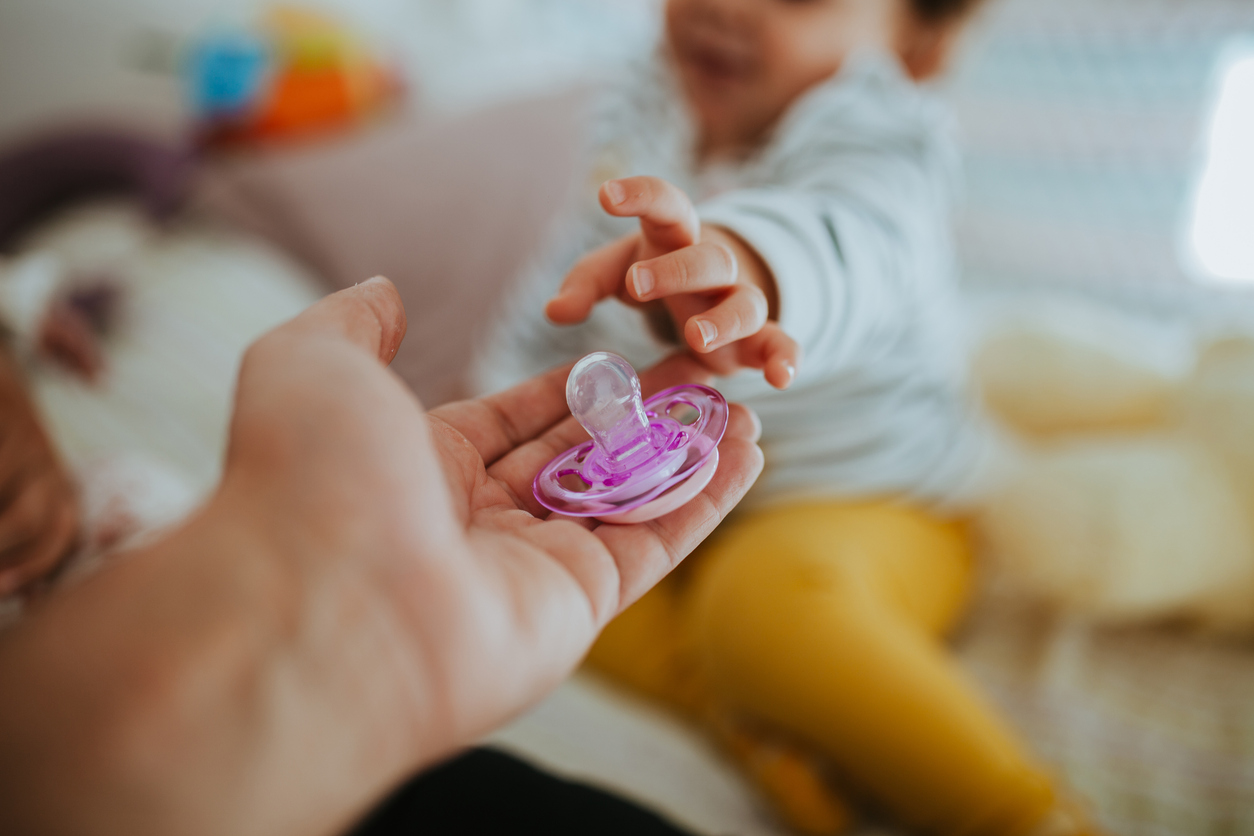
| Quick Answer: Pacifier use is normal and even soothing for babies, and short-term use doesn’t harm teeth. But frequent, prolonged use past about age 2 to 3 can affect how the teeth and jaws develop — leading to an open bite or crossbite. Most experts recommend weaning by age 3. The earlier you stop, the more likely any changes will correct on their own. |
Pacifiers are a parent’s best friend in the early months — and a common worry once the toddler years arrive. At Rio Grande Children’s Dentistry, our kid-focused dentists get this question constantly: is the pacifier hurting my child’s teeth?
The reassuring answer is that timing matters more than the pacifier itself. Here’s what to know.
Do Pacifiers Actually Damage Teeth?
Not in infancy. Sucking is a natural reflex, and pacifiers can soothe babies and even lower the risk of SIDS during sleep. The concern is prolonged, frequent use after the toddler years, when constant pressure from the pacifier can shape the growing jaw and the position of the front teeth.
What Long-Term Pacifier Use Can Cause
- Open bite — the front top and bottom teeth don’t meet when the back teeth are together.
- Overbite — the upper front teeth pushed forward.
- Crossbite — a narrowed upper arch from the tongue resting low.
- Changes to the roof of the mouth with very heavy, prolonged use.
The good news: if the habit stops by around age 3, these changes often improve on their own as the permanent teeth come in.
When Should You Wean Off the Pacifier?
Most pediatric and dental guidelines suggest weaning between ages 2 and 3, and stopping by age 3. By that point the soothing benefit has faded and the risk to the developing bite rises. If your child is still using a pacifier past age 3, it’s worth a conversation with our kid-focused team.
Gentle Ways to Break the Habit
- Go gradually — limit the pacifier to naps and bedtime first.
- Offer comfort substitutes like a favorite blanket or stuffed animal.
- Use praise and small rewards for pacifier-free days.
- Try a “pacifier fairy” or giving them away to “new babies” for older toddlers.
- Stay consistent and patient — avoid shaming, which tends to backfire.
Pacifier vs. Thumb Sucking
Both can affect the bite in similar ways, but pacifiers have one advantage: you can take them away. Thumb sucking is harder to stop because the thumb is always available. If your child does both, the pacifier is usually the easier habit to retire first.
What to Watch For
- Front teeth that don’t meet when biting down
- Upper front teeth that flare outward
- A narrow upper arch or shifting bite
- Continued daytime pacifier use past age 3
If you notice any of these, bring your child in. Catching bite changes early gives the simplest path to correcting them.
Visit Rio Grande Children’s Dentistry in Los Lunas
Our kid-focused dentists care for Los Lunas, Belen and Valencia County families from age 1 through 18 (special needs to 26). If you’re working on weaning a pacifier or wondering whether the habit has affected your child’s bite, we’re glad to take a look and reassure you — or get ahead of any changes early. Contact our office to schedule.
Frequently Asked Questions
Do pacifiers damage a child’s teeth?
Short-term use in infancy doesn’t harm teeth. Frequent, prolonged use past age 2 to 3 can affect the bite — causing an open bite, overbite, or crossbite — so weaning by age 3 is recommended.
When should my child stop using a pacifier?
Most guidelines recommend weaning between ages 2 and 3 and stopping by age 3, when the risk to the developing bite rises and the soothing benefit has faded.
Will my child’s bite fix itself after stopping the pacifier?
Often, yes. If the habit stops by about age 3, bite changes frequently improve on their own as permanent teeth come in. Our kid-focused team can check to be sure.
Is a pacifier better or worse than thumb sucking?
They affect the bite similarly, but a pacifier is easier to take away than a thumb, which is always available. Many families retire the pacifier first.
How do I get my toddler to give up the pacifier?
Go gradually (naps and bedtime only), offer comfort substitutes, use praise and small rewards, try a “pacifier fairy,” and stay consistent without shaming.
|
Working on weaning the pacifier? We truly care about your child’s health and happiness. Reach out to get your child’s appointment scheduled. We can’t wait to see you. Rio Grande Children’s Dentistry & Orthodontics │ 8201 Golf Course Rd NW, Ste C3, Albuquerque, NM 87120 │ (505) 553-3607 │ Contact Us → |